Technology
Flutter vs React Native: A Comparative Analysis for Modern Mobile App Development
01. Introduction
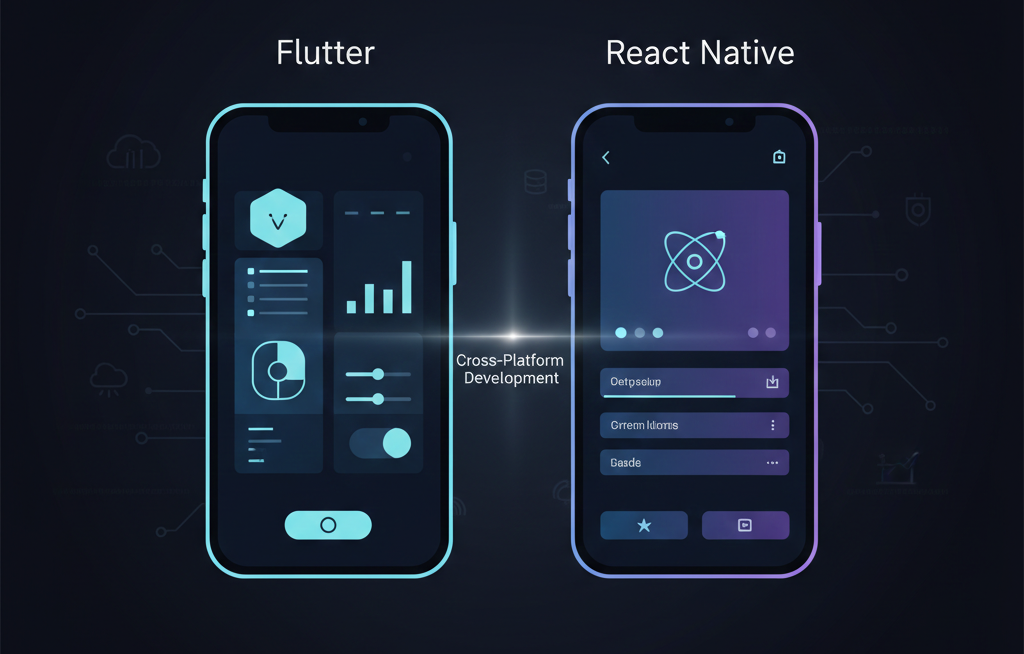
The mobile applications have become a vital part of the contemporary digital ecosystem. As Android and iOS are taking over the world smartphone market, developers and organizations have been confronted with a long-standing dilemma; how to provide quality apps in different platforms without adding significant development time and cost. Conventional native development involves using different codebases of Java or Kotlin on Android and Swift or Objective-C on iOS causing an increased level of complexity and maintenance burden. Mult project development frameworks such as cross-platform development were developed as a viable solution to these issues. React Native and Flutter are the most popular solutions of the existing ones. The two frameworks boast of shorter development cycles, common codebase, and almost-native performance. Although these are the similarities, they differ significantly in terms of architecture, rendering models, performance behavior and developer experience. The article has organized a comparison between Flutter and React Native with both the research findings and the real-world practice of development to make informed technical decisions.
02. Cross-Platform Mobile Frameworks Overview
2.1 React Native
React Native is an open-source framework developed by Facebook (Meta) that enables mobile application development using JavaScript and React. It allows developers to reuse web development knowledge while building mobile applications that render actual native UI components. React Native uses JSX to define user interfaces and relies on a JavaScript bridge to communicate between JavaScript code and native platform modules. Its Virtual DOM mechanism updates only the affected components when state changes occur, improving rendering efficiency. Because JavaScript is one of the most widely used programming languages, React Native benefits from a vast ecosystem, extensive community support, and a rich collection of third-party libraries.
2.2 Flutter
Introduced by Google, Flutter is a cross-platform UI toolkit. It uses the strongly typed, performance-optimized language Dart to write applications. Flutter, unlike React Native, is not based on native UI elements, instead, it has its own rendering engine, Skia, to render UI elements directly on the screen. Flutter has a widget-based architecture where all visual and structural items are modeled as widgets. The design allows similar behaviour of UI across platforms. Flutter generates applications in native machine code (ahead-of-time (AOT)). Besides mobile platforms, Flutter can also serve web, desktop, and embedded systems, which is why it is a versatile and visionary development framework.
03. Architecture and Rendering Models
3.1 Execution Flow
React native uses a JavaScript runtime environment. JavaScript is used to run UI logic, and native components are used to provide rendering. These layers are connected by means of communication between one another with the help of a bridge that converts JavaScript commands to native ones. Although this model is flexible, it may cause performance overhead when there is a high frequency of interactions between the JavaScript and the native modules. Flutter does not have this intermediate layer of presentation by rendering UI directly through its engine. It minimizes latency and has smoother animations, especially in apps with complicated layout or high-resistance interaction.
04. Performance Considerations
4.1 Runtime Behavior
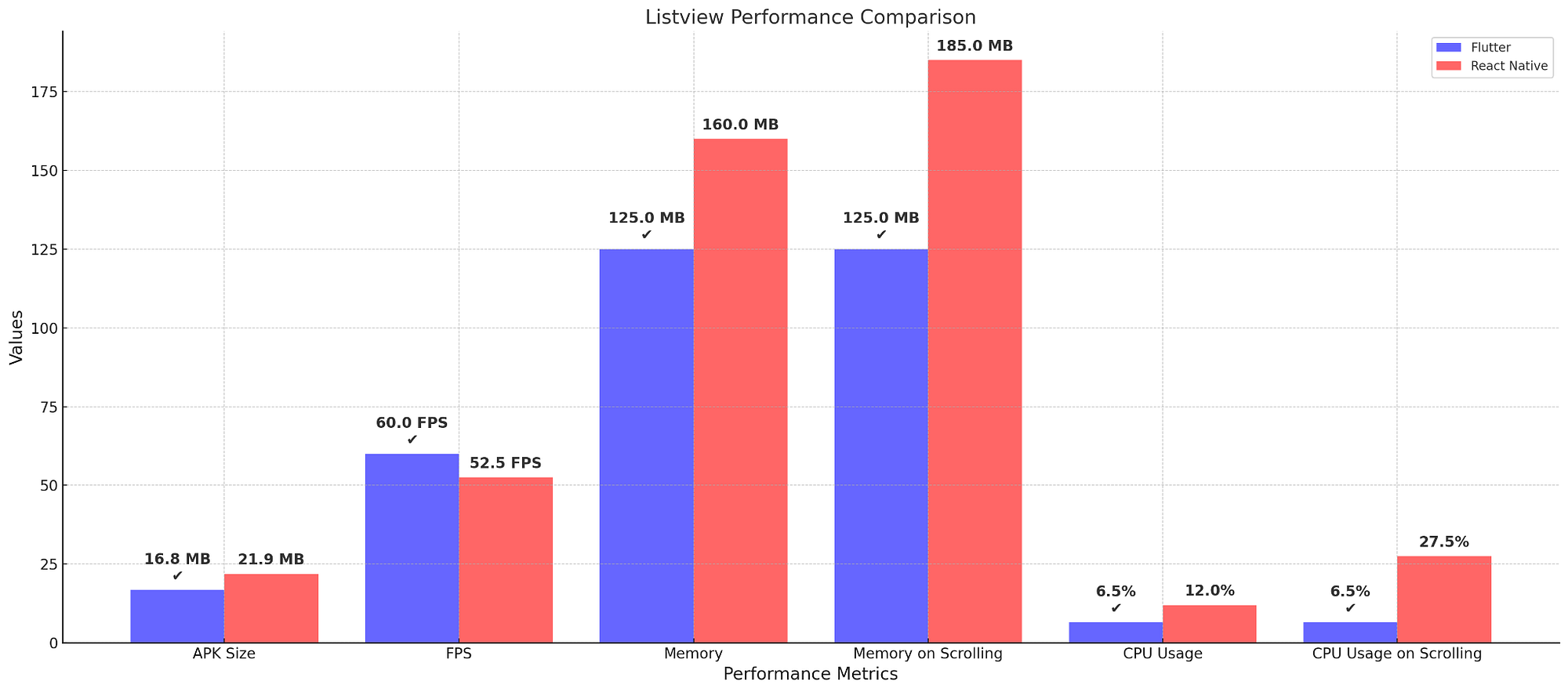
Comparisons of performance show that Flutter generally provides more stable frame rates especially when using animations and transitions. Even though Flutter applications can at first use more memory, the implementation is stable with direct rendering and compiled code. React Native works well with the majority of standard apps but can be limited with animation intensive or computation intensive apps unless it has been optimized using native modules. The variability of the performance may also be caused by the disparity in the execution of JavaScript and the quality of dependencies of the third parties.
05. Developer Experience
5.1 Programming Model
JavaScript is used in React Native, which contributes to its accessibility by developers of web development background in particular. With prior knowledge of React, existing tooling and design patterns can be reused faster, which allows onboarding and can be productive. The Dart language of Flutter provides good typing, better tooling and deterministic behavior. Even though Dart is not as popular, it is tightly integrated with the Flutter architecture and creates a unified development experience once mastered.
5.2 Hot Reload and Development Tools
Both are compatible with hot reload where a developer can see the changes made to the UI in real-time without restarting the application. The hot reload of Flutter is said to be more reliable, as it maintains the application state more consistently throughout development. Flutter also includes full official tooling, such as the flutter doctor command-line utility, making it easy to set up the environment and do diagnostics. The development environment of React Native frequently involves a heavier amount of manual setup of numerous tools and platforms.
5.3 Ecosystem and Community Support
React Native is situated with a developed EC of JavaScript and a robust selection of third-party libraries. But such dependence may present dependency maintenance and compatibility difficulties. Flutter has an ecosystem that is more centralized and self-contained, and it has quite a few built-in widgets and official packages. Though it has a younger ecosystem, it is still expanding at a very fast rate with Google and a healthy global developer community.
5.4 Testing, CI/CD, and Automation
Flutter also has native support of unit, widget, and integration testing as well as a streamlined CI/CD integration via its command-line tools. This uniformity makes automation and deployment easier to do. React Native facilitates testing with the help of third-party applications like Detox and Appium. Although they work, these tools might need further customization and are not as standardized as the native testing framework in Flutter.
5.5 Industry Adoption and Use Cases
Both Flutter and React Native are widely adopted in production environments: • Google Ads, Alibaba, Nubank, Grab, BMW, and eBay use flutter. • Applications that are powered by React Native include Facebook, Instagram, Shopify, Discord, and Bloomberg. The fact that large organizations have adopted them shows that both frameworks can be used to run production-grade applications that are scalable.
5.6 Selecting the Right Framework
Whether to use Flutter or React Native will be determined by project requirements and skill base.
React Native is appropriate in cases where:
- Teams are experienced with strong JavaScript or React.
- Speedy on-boarding is a priority.
- Web logic or libraries must be reused.
Flutter is suitable when:
- Consistency and smooth animations of the UI are necessary.
- A prediction of its performance is needed.
- Expansion to other platforms other than mobile will be executed.
Test Your Knowledge!
Click the button below to generate an AI-powered quiz based on this article.
Did you enjoy this article?
Show your appreciation by giving it a like!
Conversation (0)
Cite This Article
Generating...
.png)
