Science
Life Inside a Cell - How Molecular Mechanisms Keep Us Alive
Every living thing, from a tiny bacterium to a human being, is built from cells. Cells are often called the basic units of life because almost everything that keeps us alive happens inside them. Cell biology and molecular mechanisms focus on what is going on inside these microscopic worlds: how cells are structured, how they communicate, how they use energy, and how countless molecules work together so smoothly that we rarely notice anything until something goes wrong.
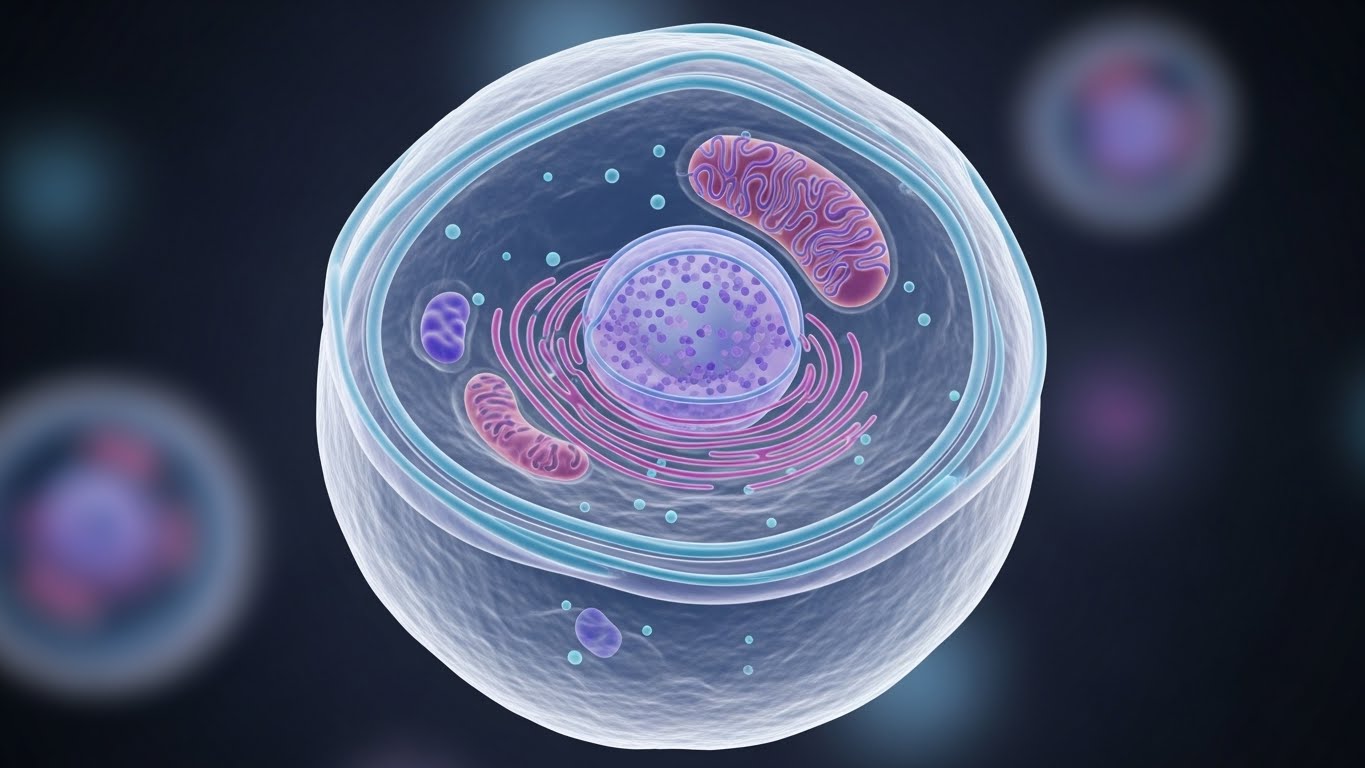
Inside each cell is an organized city. The cell membrane acts like a protective border, controlling what enters and leaves. The nucleus stores DNA, the genetic “instruction manual” that tells the cell how to build and run itself. Tiny factories called ribosomes read these instructions and build proteins, while organelles like mitochondria act as power stations, turning food into usable energy in the form of ATP. Other structures, such as the endoplasmic reticulum and Golgi apparatus, help fold, package, and ship proteins to where they are needed. Although it looks chaotic at first, every process in this cellular city follows precise molecular rules.
Proteins are the main workers in the cell. They are long chains of amino acids folded into specific three dimensional shapes. That shape determines what a protein can do whether it cuts other molecules (as an enzyme), carries oxygen (like hemoglobin), or acts as a receptor on the cell surface. Molecular mechanisms describe how these proteins interact: how an enzyme speeds up a chemical reaction, how a receptor changes shape when it detects a hormone, or how a motor protein “walks” along internal tracks to move cargo. These interactions are not random; they are highly coordinated, with proteins binding like keys fitting into locks.
Communication is another vital aspect of cell biology. Cells constantly receive signals from their environment hormones in the blood, neurotransmitters between nerve cells, or chemical messages from neighboring tissues. These signals bind to receptors on the cell surface and trigger signaling pathways inside. Often, one signal sets off a chain reaction: one activated protein switches on several others, which then activate many more. This amplification allows a small signal, such as a tiny amount of hormone, to cause a big effect, such as changes in gene expression or cell division. When signaling pathways function properly, cells grow, divide, or rest at the right times. When they break down, diseases like cancer can develop.
Energy use and metabolism are also governed by molecular mechanisms. Cells break down sugars, fats, and other nutrients in a series of controlled steps, capturing energy in small packets instead of wasting it as heat. Enzymes guide each step, ensuring that molecules flow along the correct pathways. Feedback systems monitor conditions: if the cell has enough energy, some pathways slow down; if energy is low, others accelerate. This fine tuned control keeps the internal environment stable, even when the outside world changes.
Cell biology and molecular mechanisms are not just abstract science; they are directly linked to medicine and biotechnology. Many drugs work by targeting specific proteins or pathways inside cells blocking a viral enzyme, calming an overactive immune signal, or switching off a cancer promoting receptor. Genetic diseases arise when instructions in DNA are faulty, leading to defective proteins and disrupted mechanisms. Understanding these details allows researchers to design therapies that correct, bypass, or compensate for what has gone wrong, from gene therapies to precisely targeted cancer treatments.
Perhaps the most remarkable thing is how universal these mechanisms are. The same basic principles of DNA, proteins, and signaling apply in yeast, plants, animals, and humans. This shared language of life means that studying simple organisms can reveal insights into our own health. When we look at cell biology and molecular mechanisms, we are not just peering into tiny structures; we are learning the rules that govern life itself, from the smallest cell to the most complex organism.
Test Your Knowledge!
Click the button below to generate an AI-powered quiz based on this article.
Did you enjoy this article?
Show your appreciation by giving it a like!
Conversation (0)
Cite This Article
Generating...


.jpg)