Technology
Regenerative Medicine and Tissue Engineering - Growing New Body Parts
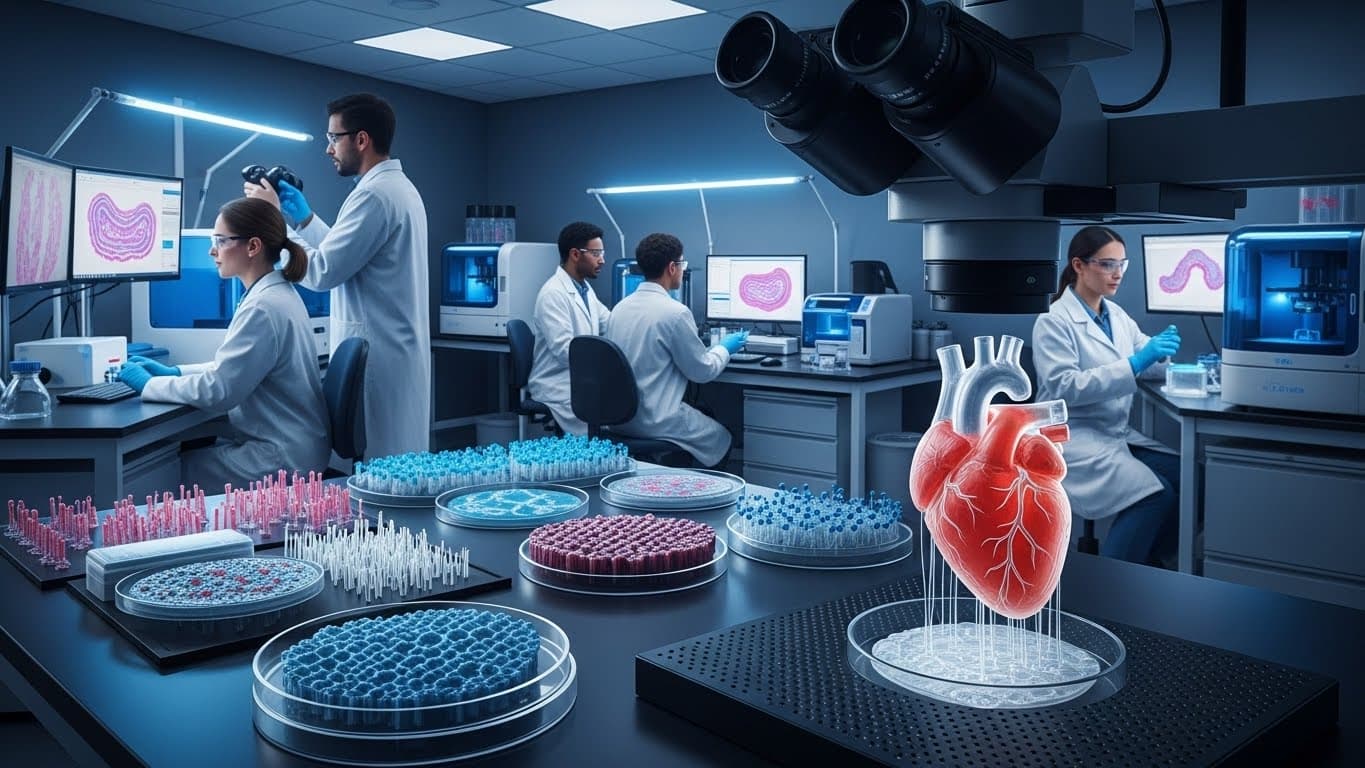
Regenerative medicine and tissue engineering represent one of the most exciting frontiers in modern healthcare, offering hope for repairing or replacing damaged tissues and organs that our bodies can't heal on their own. Imagine a future where heart attack patients grow new heart muscle, burn victims receive lab-grown skin without scarring, or people with spinal cord injuries regain the ability to walk these aren't science fiction anymore but active areas of research transforming lives. This field combines biology, engineering, and advanced materials science to harness the body's natural healing powers while creating artificial scaffolds and tissues that integrate seamlessly with human anatomy (Atala et al., 2023).
At the heart of regenerative medicine are stem cells special cells that can develop into many different types of tissue. Scientists use induced pluripotent stem cells (iPSCs), which can be created from a patient's own skin cells, avoiding rejection issues common with donor transplants. These stem cells are seeded onto biocompatible scaffolds 3D structures made from hydrogels, collagen, or synthetic polymers that mimic the body's extracellular matrix. Over time, the cells grow, multiply, and organize into functional tissues, guided by growth factors and precise environmental controls in bioreactors (Ouyang et al., 2025).
One of the most revolutionary techniques is 3D bioprinting, where printers layer living cells, biomaterials, and nutrients to construct complex tissues layer by layer. Recent advances include 4D bioprinting, where printed structures respond to environmental stimuli like temperature or pH to change shape over time, mimicking natural tissue development. Researchers have successfully printed blood vessels, cartilage, and even small sections of heart tissue that beat rhythmically. Clinical trials are underway for printed skin grafts for burn patients and corneal tissue for the blind (Abolhassani et al., 2025).
.png&w=3840&q=75)
Gene editing technologies like CRISPR-Cas9 are supercharging regenerative medicine by correcting genetic defects before cells are implanted. For genetic disorders like muscular dystrophy or cystic fibrosis, edited stem cells can regenerate healthy muscle or lung tissue. Combined with mRNA therapies, this approach allows temporary boosts to healing genes without permanent DNA changes, reducing risks (Leong et al., 2025). Challenges remain significant. Vascularization creating blood vessels within engineered tissues is crucial for nutrients to reach deep layers, preventing cell death. Immune responses, scalability for large organs like livers or kidneys, and long-term functionality all require solutions. Yet progress accelerates organoids (mini-organs grown in labs) now model diseases accurately, while acellular scaffolds tissues stripped of cells but retaining structure are repopulated with patient cells for low-rejection transplants (Verboket et al., 2024).
Real-world applications inspire hope. In 2024, the first fully lab-grown trachea transplant succeeded, and skin substitutes treat chronic wounds effectively. Cartilage implants for osteoarthritis knees show 85% success rates. Future visions include whole-heart patches, personalized livers for transplant shortages, and neural tissue for Parkinson's potentially eliminating donor waitlists.
Regenerative medicine shifts healthcare from symptom management to true restoration. By growing patient-specific tissues, it reduces surgery invasiveness, cuts rejection risks, and personalizes treatment. Ethical considerations like equitable access and long-term safety guide responsible development. As 3D printing, AI-optimized designs, and gene therapies converge, this field promises a revolution where incurable becomes treatable (Sahakyants & Vacanti, 2020).
Test Your Knowledge!
Click the button below to generate an AI-powered quiz based on this article.
Did you enjoy this article?
Show your appreciation by giving it a like!
Conversation (0)
Cite This Article
Generating...

.png&w=3840&q=75)
.jpg&w=3840&q=75)