Technology
AI-Driven Mobile Experiences: Transforming UX in 2026
Introduction
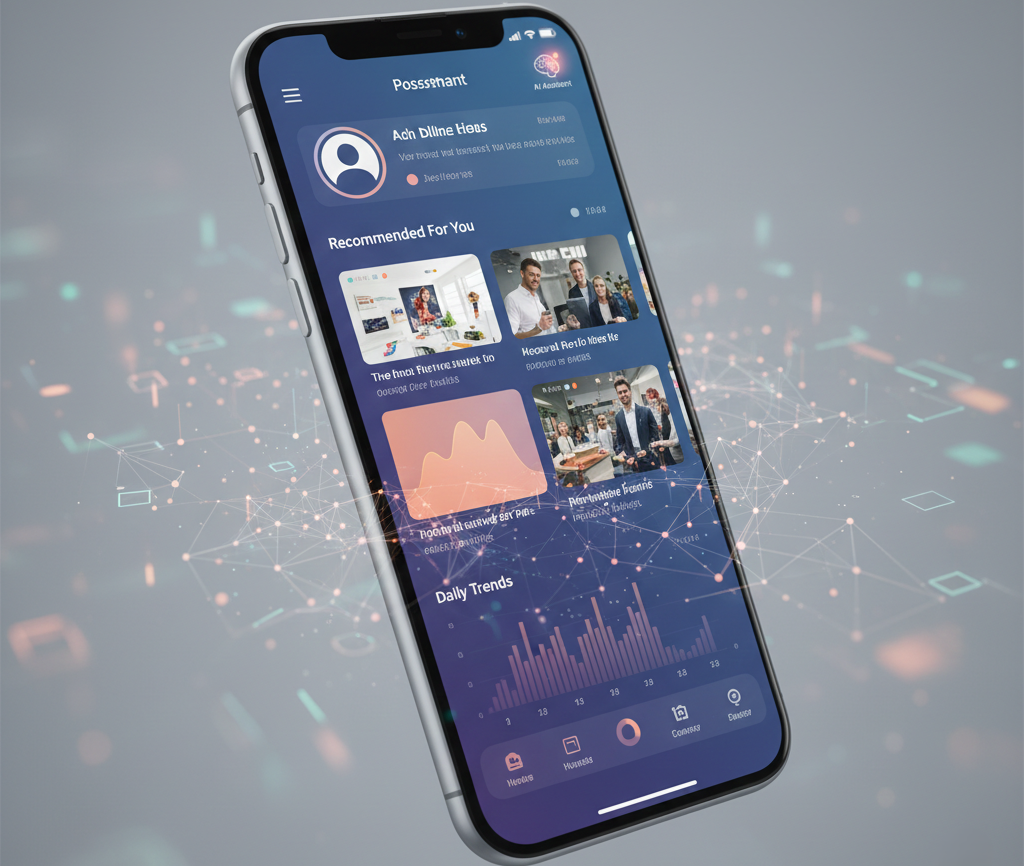
Mobile applications are not just stagnant applications that react to the input of the user anymore. Decades on, in the year 2026, mobile experiences are becoming intelligent, adaptive, and highly personalized, and this is due to the rapid progress of artificial intelligence. Predictive interfaces, emotion-sensitive design, and AI is influencing the way people are engaging with mobile applications and the definition of good user experience. On the one hand, due to the increasing power of smartphones and the increasing efficiency of AI models, the mobile UX is moving towards the category of proactive experiences instead of reactive design. The applications now expect the users, evolve in real-time, and provide smooth interactions between devices and situations. Such transformation is not only transforming the appearance and experience of the apps but also the design, development, and maintenance of these applications. This paper examines how AI-powered technologies can change how mobile users experience things in 2026, outlining key trends, real-life application, and the implications of the change to mobile developers and designers.
The Evolution of Mobile UX Through AI
Conventional mobile UX was on predetermined flows, pre-established layouts and manual interactions between the user. Although efficient, these designs were the same to all users irrespective of their behavior, preferences or the situation. This approach has been transformed by AI. Current mobile apps now use machine learning algorithms, on-phone AI and cloud AI to learn the users on a personal basis. The app does not require a user to change because it changes with the user. This has led to more human friendly, receptive and responsive mobile experiences.
Hyper-Personalization as the New Standard
Hyper-personalization is one of the most evident effects of AI on mobile UX. In contrast to personalization at the basic level, where the content is modified according to straightforward rules, AI personalization learns all the time depending on user behavior. Mobile apps now analyze:
- Navigation patterns
- Usage frequency
- Interaction timing
- Location and environmental context
- Device and sensor data
Based on this data, AI systems dynamically optimize layouts, content, notification, and even feature availability. An example is how a fitness application can change its interface depending on the energy of the user, the history of the workouts and the daily routine. A finance application can be used to show various features based on the spending habits and financial objectives. This degree of personalization goes a long way towards enhancing engagement, lowering friction, and establishing a sense that the app is aware of the user.
Conversational Interfaces and Voice-First UX
By 2026, conversational AI has evolved to an advanced level, changing the way users can interact with mobile apps. Voice interfaces and chat-based interfaces are not confined to simple commands anymore. They have now come to be in favor of complex and multi-step interactions with contextual knowledge. Contemporary chat UX enables users to:
- Perform tasks in natural language.
- Ask questions of follow up, but not repetitive.
- Use voice and text interchangeably.
- Communicate in real life without touching hands.
This particularly has a strong effect on accessibility, multitasking, and new markets. User-friendly voice interface lowers the barrier to users with disabilities and allows interaction in situations where touch input is not convenient or safe. Conversational AI as mobile apps are used well, they do not seem like software but intelligent assistants.
Emotion-Aware and Adaptive UX
Emotion-aware design is one of the most progressive trends in mobile UX developed by AI. Based on typing behavior, facial features, voice, and the speed of interaction, AI models are able to deduce the emotional state of a user.
The emotion-conscious UX is applied in a responsible way in 2026 to:
- Adjust tone and messaging
- Notifications When stressed, minimize contact.
- Give encouraging feedback in times of frustration.
- Improve interactions in favourable times.
An example of a learning app can be slowed down in case of confusion being detected, and a wellness app will propose relaxing activities when one is stressed. This adaptive approach creates experiences that feel empathetic rather than mechanical, strengthening user trust and satisfaction.
On-Device AI and Privacy-First UX
With the privacy concerns rising, on device AI has become an important aspect of mobile UX design. Many AI models are now made to operate locally on the device of the user instead of uploading sensitive information to the cloud.
On-device AI enables:
- Faster response times
- Offline functionality
- Reduced data transmission
- Greater privacy and security.
In 2026 the user is more conscious of the usage of their data. Applications that openly share the use of AI and use privacy as a priority receive more trust. Privacy controls, explainable AI feedback, and explicit consent are now considered part of the user experience in UX design.
Impact on Mobile Developers and Designers
The AI-based UX had a marked impact on the construction of mobile applications. Developers have ceased to employ the concept of the static interfaces and are instead coming up with the adaptive systems that change with time. Key shifts include:
- Designing to support diverse UX conditions rather than definite screens.
- Implementation of AI models in the frontend decision-making.
- Close working with data scientists.
- Behavioural testing UX in various AI-driven scenarios.
To designers, automation and clarity are a challenge that has to be incorporated in balance. Although AI makes work more efficient, the user should not feel like being controlled. Effective AI-driven UX architecture renders intelligence unnoticeable, useful and non-intrusive.
Real-World Applications of AI-Driven Mobile UX By 2026, AI-enhanced UX will be used in most industries:
- Healthcare applications customize treatment programs and prompts.
- E-commerce platforms provide purposeful shopping experience.
- Finance applications offer insights and fraud prevention that are predictive.
- Learning paths are adjusted dynamically on education platforms.
- Smart mobility applications improve route optimization and travel suggestions in real time.
The Future of Mobile UX
The connection between technology and users is being redefined using AI-driven mobile experiences. The greatest mobile application of 2026 is not one with the largest amount of features, it is one that is intuitive, adaptive, and human. With the further development of AI, mobile UX will be even more contextual, emotionally intelligent, and blended into everyday life. As a mobile developer and software engineer, an AI-driven UX is now not an option. It will be crucial in developing applications that will be pertinent even in a smarter digital world. Mobile UX is not only intelligent in the future. It is individual, anticipatory and very human.
Test Your Knowledge!
Click the button below to generate an AI-powered quiz based on this article.
Did you enjoy this article?
Show your appreciation by giving it a like!
Conversation (0)
Cite This Article
Generating...


