Science
What Are Hurricane/ Typhoons/ Cyclones Categories? A Guide to the Saffir-Simpson Scale
Introduction
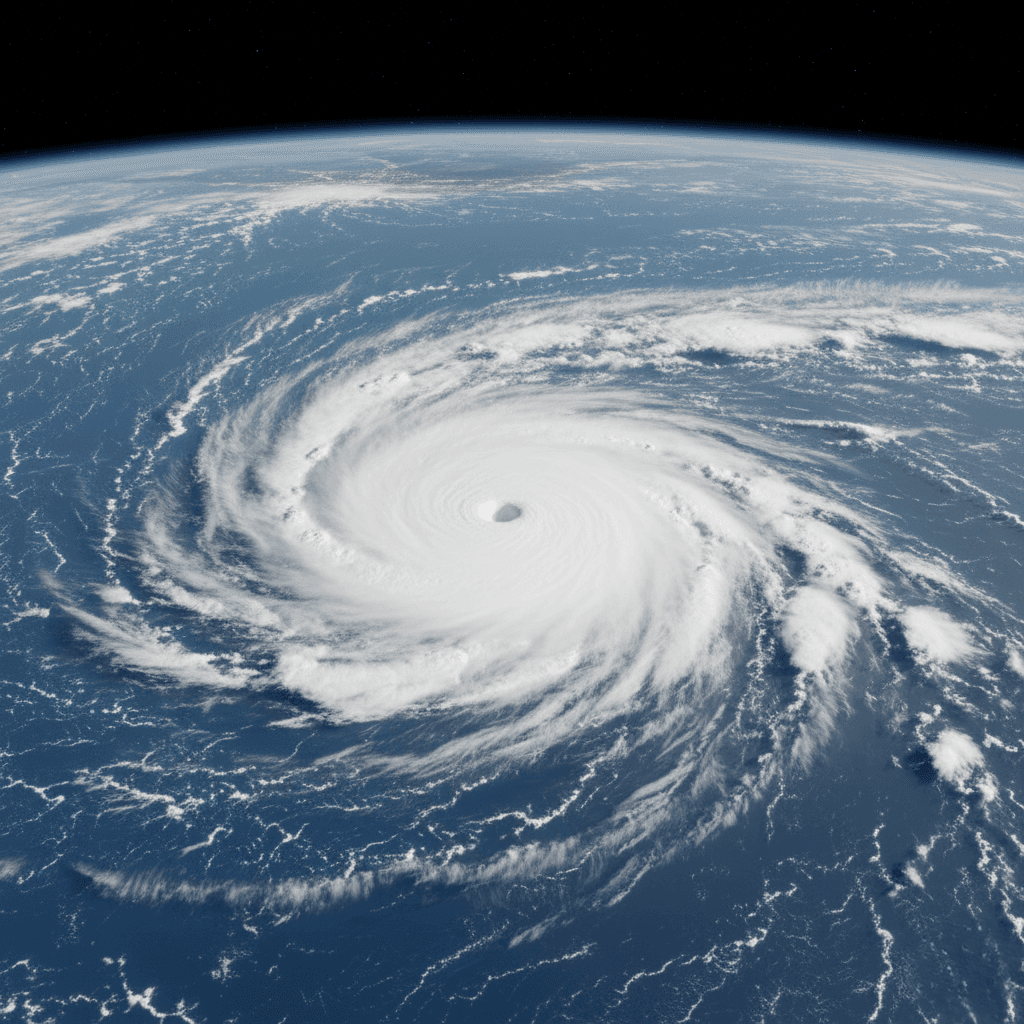
What is a hurricane? It is a giant, powerful storm that spins in a circle. It forms over warm ocean water and uses the warm, moist air as its fuel. As it gets stronger, it can have very fast winds, heavy rain, and cause huge waves. These storms are some of the most powerful events on Earth. We call them hurricanes if they form over the Atlantic or Eastern Pacific Oceans. In the Northwest Pacific, they are called typhoons. In the Indian Ocean, they are called cyclones. They are all the same type of storm. When a storm like this moves toward land, it is very important to warn people. A clear warning helps people understand the danger so they can stay safe. To do this, weather experts use a special system called the Saffir-Simpson Hurricane Wind Scale. This scale "grades" the hurricane with a number from 1 to 5. This number is called the "category." The category number is based on only one thing: the speed of the wind. A higher number means stronger winds. This scale is a great, simple tool, but it's important to remember that wind is only one of the dangers.
Core Explanation: The Saffir-Simpson Scale
The Saffir-Simpson scale was made in the 1970s. It helps everyone quickly understand how much damage a hurricane's wind can do. A storm is only called a "hurricane" when its steady wind speed reaches 74 miles per hour (119 km/h). Before that, it is a "tropical storm." Let's look at the five categories and what they mean in the real world.
- Category 1: Very Dangerous Winds
- Wind Speed: 74-95 mph / 119-153 km/h
- What it looks like: Winds are strong enough to damage houses. Shingles or tiles can be blown off a roof. Gutters and vinyl siding can be pulled off. Large tree branches will break, and some trees with shallow roots can be pushed over. Power lines will be knocked down, leading to power cuts that can last for several days.
- Category 2: Extremely Dangerous Winds
- Wind Speed: 96-110 mph / 154-177 km/h
- What it looks like: Winds are much more dangerous. They can cause major damage to the roof and sides of a well-built house. Many trees will be broken or pulled from the ground, blocking roads. The power will go out for a long time, from many days to weeks. Finding clean water might become difficult.
- Category 3: Devastating Damage
- Wind Speed: 111-129 mph / 178-208 km/h
- What it looks like: This is when the damage becomes devastating (very, very bad). A well-built house can have its roof completely torn off. Many trees will be snapped in half or pulled up from the roots, making most roads impassable. You will lose both electricity and water. You might not have them for several weeks. Important: This is the first level of a "Major Hurricane" (Cat 3, 4, and 5).
- Category 4: Catastrophic Damage
- Wind Speed: 130-156 mph / 209-251 km/h
- What it looks like: This is a catastrophe (a total disaster). Most of the roof and even some outside walls of a house will be destroyed. Most trees will be gone. Power poles will be flattened. The area will be unlivable, meaning you cannot live there. It will take weeks or even months to clean up. Power may not come back for months.
- Category 5: Catastrophic Damage (The Highest Level)
- Wind Speed: 157 mph (252 km/h) or higher
- What it looks like: This is the worst-case scenario. A high number of well-built homes will be completely destroyed. Only a few buildings, like hospitals or schools built with steel and concrete, might survive. The entire area will be flattened. There will be no power or water for months. The area will be unlivable for a very long time.
Beyond the Category: The Hidden Dangers
The category number is important, but it is very dangerous to only pay attention to the wind. A hurricane brings many other dangers that the category number does not include. These "hidden dangers" are often more deadly than the wind.
- Storm Surge This is the number one killer in a hurricane. Storm surge is NOT a normal wave. It is a giant wall of ocean water that the hurricane's winds push onto the land. This water rises very fast and has huge power. It can flood entire towns, pick up cars, and destroy the first and second floors of buildings. A "weak" Category 1 storm can cause a massive, deadly storm surge if it is large or hits a shallow coast.
- Rainfall and Inland Flooding A hurricane can drop huge amounts of rain. The speed of the storm (how fast it is moving) is more important here than its wind speed. A slow-moving storm (like one moving at only 5 mph) can sit over one city for days. It can drop 20, 30, or even 40 inches of rain. This causes terrible floods far away from the ocean. This "inland flooding" is the second biggest killer.
- Tornadoes Hurricanes also create tornadoes. These are small, spinning tubes of wind that are extremely violent. They usually form in the storm's outer rain bands (often the front-right side of the storm). They can be hard to see because they are wrapped in heavy rain, and they can destroy a building in seconds.
Conclusion
The Saffir-Simpson scale is a good, simple tool. It gives us a number from 1 to 5 to understand the wind danger. But we have learned that the true danger of a storm is much bigger. To be safe, you must look "beyond the category." Remember that a "weak" storm for wind (like a Category 1) can be a "strong" storm for rain or storm surge. Always listen to your local emergency leaders. They know the risk for your specific street. They will tell you if you need to leave your home to escape a flood or storm surge. The most important lesson is to respect every storm, no matter the category. A good plan and listening to official warnings are the best ways to keep your family safe.
Test Your Knowledge!
Click the button below to generate an AI-powered quiz based on this article.
Did you enjoy this article?
Show your appreciation by giving it a like!
Conversation (0)
Cite This Article
Generating...
.png&w=3840&q=75)