Technology
Escaping Pilot Purgatory: How TCS and AMD Are Finally Scaling Enterprise AI
It feels like for the past two years, every C-suite executive has had the same mandate: "Do something with Generative AI."
As we settle into 2026, the initial wave of massive hype has settled. What's left is a stark reality check. Thousands of companies have launched successful AI "pilots" impressive little experiments running in isolated sandboxes. But very few have managed to move those pilots into full-scale, revenue-generating production.
Scaling AI is hard. It breaks legacy infrastructure, it demands immense computational power, and it requires specialized knowledge to tailor models to specific industries.
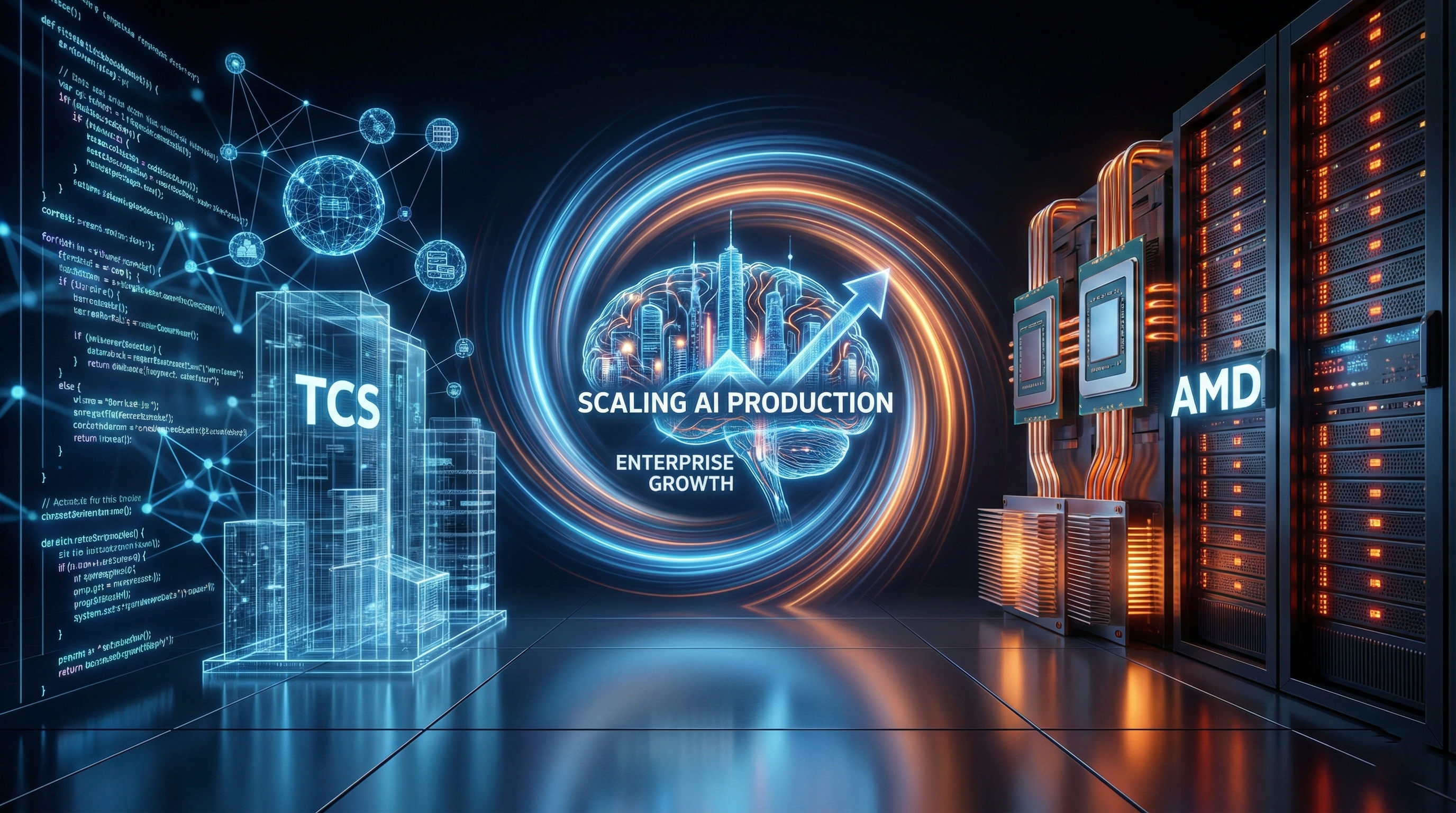
This is the exact bottleneck the recently announced strategic collaboration between Tata Consultancy Services (TCS) and AMD aims to shatter.
The Engine and The Mechanic
This isn't just another generic corporate partnership press release. It’s a calculated move to solve the infrastructure crisis facing enterprise AI.
To put it simply: AMD is providing the new high performance engines, and TCS is the master mechanic knowing exactly how to retrofit those engines into massive, complex global businesses.
The collaboration focuses on utilizing AMD’s high-performance hardware specifically their EPYC CPUs for data center grunt work and Instinct GPUs for AI training and inference as the foundation. TCS then steps in to build industry specific solutions on top of this hardware stack, helping clients modernize hybrid cloud environments tailored for heavy AI workloads.
Moving Beyond General Purpose AI
What makes this collaboration significant is the move away from "one-size-fits-all" AI models. TCS is leveraging AMD's compute power to build highly specialized solutions.
Based on the announcement, we are looking at tangible impacts across critical sectors:
- Life Sciences: Accelerating the incredibly data-heavy process of drug discovery.
- Manufacturing: Moving beyond basic automation to true "quality engineering" and smarter factory floors using AI at the edge.
- BFSI (Banking & Finance): Deploying robust models for complex risk management and fraud detection that can operate at a global banking scale.
The Human Element: Upskilling at Scale
Perhaps the most understated, yet critical part of this deal is the human resource commitment. TCS isn't just buying AMD chips; they are training thousands of their own engineers on AMD's specific architecture and software ecosystems (like ROCm).
This is crucial for the 2026 market. It means enterprises won't just get raw hardware dumped at their door; they will have access to a massive workforce of TCS experts who actually know how to optimize code and build applications specifically for that hardware.
The Takeaway for 2026
For the last few years, the AI hardware conversation has been dominated by a single player. The TCS-AMD alliance offers the enterprise market something it desperately needs right now: a viable, powerful alternative and a clear roadmap for implementation.
For businesses stuck in the "pilot phase," this partnership signals that the tools and the expertise needed to scale are finally coming together under one roof. It’s time to stop experimenting and start producing.
Test Your Knowledge!
Click the button below to generate an AI-powered quiz based on this article.
Did you enjoy this article?
Show your appreciation by giving it a like!
Conversation (0)
Cite This Article
Generating...
.png)