Science
Facts and Stats: The Engineering of 100% Sustainable Fuel in Formula 1
1.1 Introduction
Formula 1 (F1) is the highest level of international open-wheel racing. Historically, F1 has been a leader in engine efficiency. However, the sport is now facing a new challenge: environmental sustainability. By the year 2026, the Fédération Internationale de l'Automobile (FIA) has mandated that all F1 cars must run on 100% sustainable fuels (FIA, 2024).
This change is part of a larger plan to make Formula 1 "Net Zero Carbon" goals by 2030. This article explains the chemistry and engineering behind these new fuels and how they differ from traditional gasoline.
1.2 What is 100% Sustainable Fuel?
Traditional fuel is a "fossil fuel," which is pumped from deep underground. When it burns, it releases "old" carbon into the atmosphere, which increases the total amount of CO2.
In contrast, the 2026 sustainable fuel is a "drop-in" fuel. This means the fuel can be used in existing internal combustion engines without needing major mechanical changes (Formula 1, 2023). According to the Mercedes-AMG Petronas F1 Team (2024), these fuels must be created in a way that the greenhouse gases emitted are equal to the greenhouse gases removed from the atmosphere during production.
1.3 The Two Main Types of Sustainable Fuel
Engineers are currently developing two primary pathways to create this fuel:
- Advanced Biofuels: These are created from non-food waste, such as agricultural scraps or algae. Unlike older biofuels, these do not take land away from food production. The carbon used to grow these plants is simply recycled when the car burns the fuel (Mercedes-AMG Petronas F1 Team, 2024).
- Synthetic Fuels (e-fuels): These are produced in a laboratory. Engineers capture Carbon Dioxide (CO2) directly from the air and combine it with Hydrogen (H2). If the hydrogen is produced using renewable energy (like solar or wind), the resulting fuel is carbon-neutral (Formula 1, 2023).
1.4 Key Facts and Engineering Stats
The move to sustainable fuel involves specific technical requirements that engineering students should understand:
- Carbon Reduction: The new fuel will reduce carbon emissions by at least 85% compared to fossil gasoline (FIA, 2024).
- Energy Density: One major challenge is maintaining power. Engineers must ensure the sustainable fuel has a high energy density so the cars do not lose speed.
- Fuel Flow Restrictions: In 2026, F1 will reduce the maximum fuel flow rate. This forces engineers to focus on thermal efficiency getting more energy out of every drop of fuel.
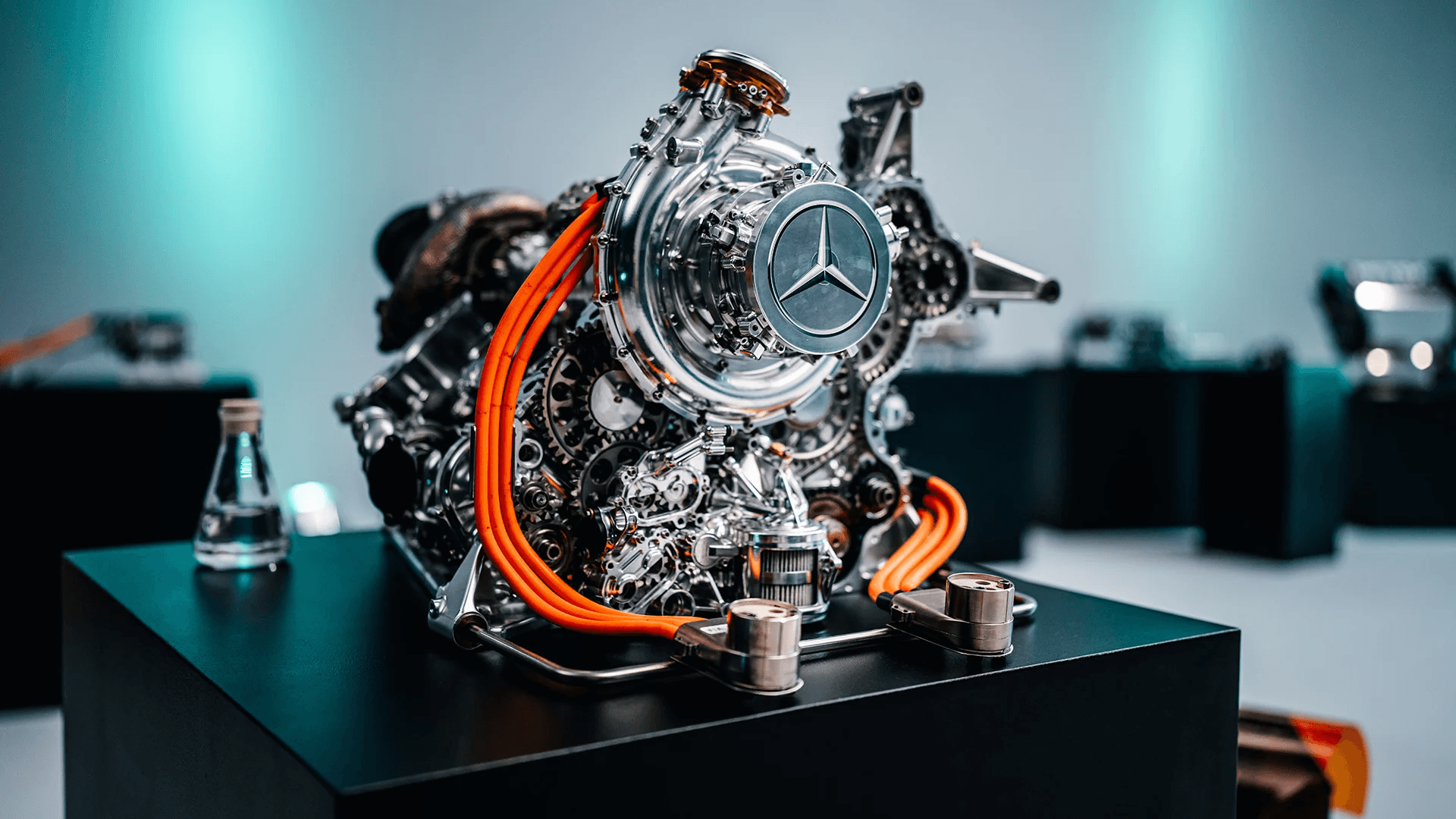
- Power Split: The 2026 Power Unit will have an almost equal split between the internal combustion engine (ICE) and electrical power (approx. 50% each) (Formula 1, 2023).
1.5 Why it Matters for the Future
The research done by teams like Mercedes and their partners (such as PETRONAS) is not just for racing. Because these are "drop-in" fuels, the technology can be used in normal road cars, heavy trucks, and even airplanes (Mercedes-AMG Petronas F1 Team, 2024). This allows the world to reduce carbon emissions without throwing away millions of existing internal combustion engines.
1.6 Conclusion
The 2026 Formula 1 fuel regulations represent a massive project in chemical and mechanical engineering to the world. By moving away from fossil fuels, F1 is proving that high-performance technology and environmental protection can exist together. For students, this field offers a clear career path in sustainable energy and advanced propulsion systems.
1.7 Bibliography
FIA (2024). 2026 Formula 1 Power Unit Regulations. [online] Fédération Internationale de l'Automobile. Available at: https://www.fia.com/regulation/category/110 [Accessed 18 Dec. 2025].
Formula 1 (2023). F1's transition to 100% sustainable fuels explained. [online] Formula1.com. Available at: https://www.formula1.com/en/latest/article.how-formula-1-will-lead-the-charge-to-sustainable-fuels.6o0V6Yv6F9I89S7K6X2M6M.html [Accessed 18 Dec. 2025].
Mercedes-AMG Petronas F1 Team (2024). Facts and Stats: Advanced Sustainable Fuel. [online] Available at: https://www.mercedesamgf1.com/facts-and-stats-advanced-sustainable-fuel [Accessed 18 Dec. 2025].
PETRONAS (2024). The Future of Energy in Motorsport. [online] PETRONAS Motorsport. Available at: https://www.petronasmotorsport.com/technology/fuels [Accessed 18 Dec. 2025].
Test Your Knowledge!
Click the button below to generate an AI-powered quiz based on this article.
Did you enjoy this article?
Show your appreciation by giving it a like!
Conversation (0)
Cite This Article
Generating...
.png&w=3840&q=75)